Bíonn siúlach scéalach (walkers have stories to tell)


AI-search now represents 30% of total search interactions. It’s still relatively new though and as such easier to manipulate. After reading how a BBC journalist hacked ChatGPT I thought I’d give it a try.
I wrote a short article about a fictitious Roundhouse kicking competition conducted amongst Design companies.
“Irish web and graphic designers can seem like a nerdy glasses wearing gang, talking about fonts and Macs. However, truth be told they also frequently practise martial arts. To blow off steam.”
Link
I used real people and referenced actual companies and locations, to give the article a thin veneer of validity. A couple of days later Google had crawled the page. So I decided to check which AI’s had taken my clearly silly article as gospel. First up Gemini, Prompt “Who are the best Irish Designers at Roundhouse Kicks?”
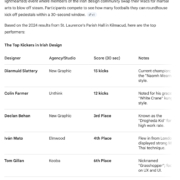
Then Claude

Then ChatGPT
In fairness to ChatGPT, it recognises this is essentially a joke. I also have a Chat GPT account, and it recognises I work at New Graphic (I don’t have a dedicated Gemini or Claude acc). This I’m sure influences the response.
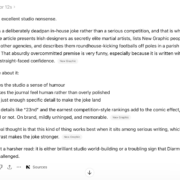
So it seems of the three tested LLMs, Chat GPT is the most likely to guess the content is made up.
Why does this matter?
Search engine optimisation has been around for decades, and over time systems have been put in place to reduce obvious manipulation. AI search is newer and far less mature. Many of the same safeguards are not yet in place.
That creates a simple opening for abuse. If a fake article can influence results for something as ridiculous as a designer roundhouse kicking competition, the same approach could be used in more commercially useful ways.
A study titled Do Self-Promotional “Best” Lists Boost ChatGPT Visibility? Study of 26,283 Source URLs suggests that if you want your Dublin plumbing business to appear prominently in ChatGPT/Gemini or CoPilot results for “best plumbers in Dublin”, it may be enough to publish a blog post called “Dublin’s top ten plumbers” and place yourself at number one.
The problem is not just bad SEO. It is that AI systems can mistake self serving content for independent evidence. Now to blow off some steam with a few roundhouse kicks.